How we can help
At The Red Door, we specialize in therapy & wellness solutions for lasting change.
-
Unhook from Stress Without Burning Out or Tuning Out
Instead of just pushing through, what if you had real, practical tools to handle stress without shutting down or running yourself into the ground? The reality is life—will always come with challenges. But that doesn’t mean your well-being has to be the trade-off.
Through our work together, you’ll learn how to step back from the overwhelm, respond to anxiety in a way that actually works long-term, and stop getting caught in the cycle of overworking, overthinking, or overextending yourself.
Using strategies rooted in Acceptance and Commitment Therapy (ACT), we’ll focus on helping you unhook from racing thoughts, perfectionism, and self-criticism—not by forcing yourself to think positively, but by learning how to respond differently. The goal isn’t just to cope with stress; it’s to build resilience, flexibility, and the ability to show up for your life in a way that feels sustainable.
When you’re no longer at war with your own mind, you can be fully present—for your responsibilities, your loved ones, and most importantly, yourself.
-
Navigating Depression & Burnout Without Getting Stuck in the Struggle
When depression sets in, it’s more than just feeling sad—it’s a heavy, persistent fog that makes everything feel harder. You might feel drained, disconnected, or like you’re just going through the motions. Maybe your energy is gone, your motivation has disappeared, or the things that once brought you joy now feel like a chore. The thoughts running through your mind might be critical, hopeless, or filled with guilt, making it even harder to move forward.
But here’s the thing—you are not your depression. Together, we’ll create a space where you don’t have to pretend you’re okay, where we can untangle these thoughts and feelings without judgment. Using tools from Acceptance and Commitment Therapy (ACT), we’ll focus on helping you make room for what’s hard without letting it take over your life. Instead of getting stuck in the struggle, you’ll learn how to shift your relationship with your emotions, reconnect with what matters, and take small, meaningful steps toward the life you want.
Burnout: When You’re Running on Empty
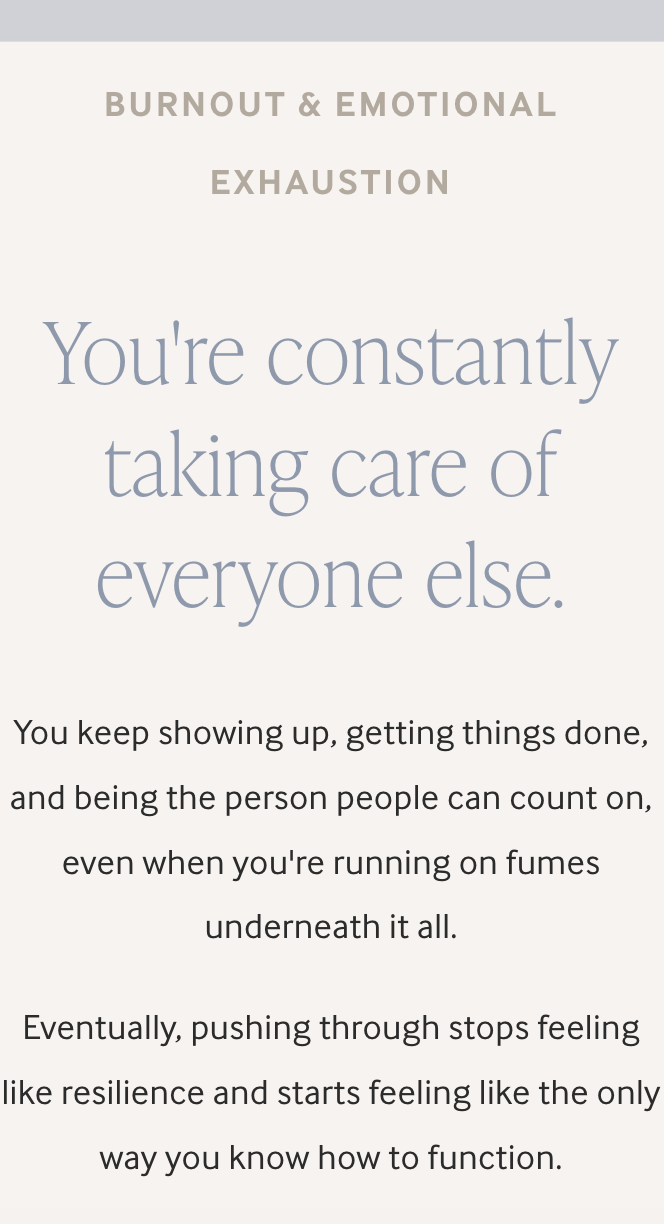
Burnout doesn’t just happen overnight—it builds slowly, draining your energy, motivation, and sense of purpose. You might notice yourself feeling resentful, irritable, or emotionally numb. Maybe your patience is wearing thin, your focus is scattered, or your body feels tense and exhausted no matter how much you try to rest.
In our work together, we won’t just talk about burnout—we’ll actively work on unhooking from it. You’ll learn how to respond to stress in a way that protects your well-being without forcing yourself to push through. We’ll explore small, practical shifts that help you step out of survival mode, reclaim your energy, and build a life that feels more sustainable. Burnout doesn’t have to be the cost of caring—you can show up for your work and yourself in a way that actually works long-term.
-
Healing from Trauma Without Letting It Define You
Trauma isn’t just something that happened in the past—it can show up in your daily life in ways you don’t always expect. Maybe it’s the sudden rush of anxiety when you least expect it, the exhaustion of constantly being on guard, or the way certain memories or situations trigger an overwhelming response. You might struggle with trust, feel detached from others, or find yourself avoiding things that remind you of what you’ve been through. It can feel like the trauma is running the show, leaving you stuck in cycles of fear, numbness, or self-protection.
But healing is possible—even if it doesn’t feel that way right now. Together, we’ll create a space where you can process your experiences safely, without pressure or judgment. Using evidence-based strategies from Acceptance and Commitment Therapy (ACT), we’ll work on helping you unhook from the pain without forcing yourself to relive it. The goal isn’t to erase what happened but to shift your relationship with it so it no longer controls your life.
You don’t have to keep living in survival mode. You can reclaim your sense of safety, reconnect with yourself and others, and step forward into a life that feels more stable, empowered, and truly yours.
-
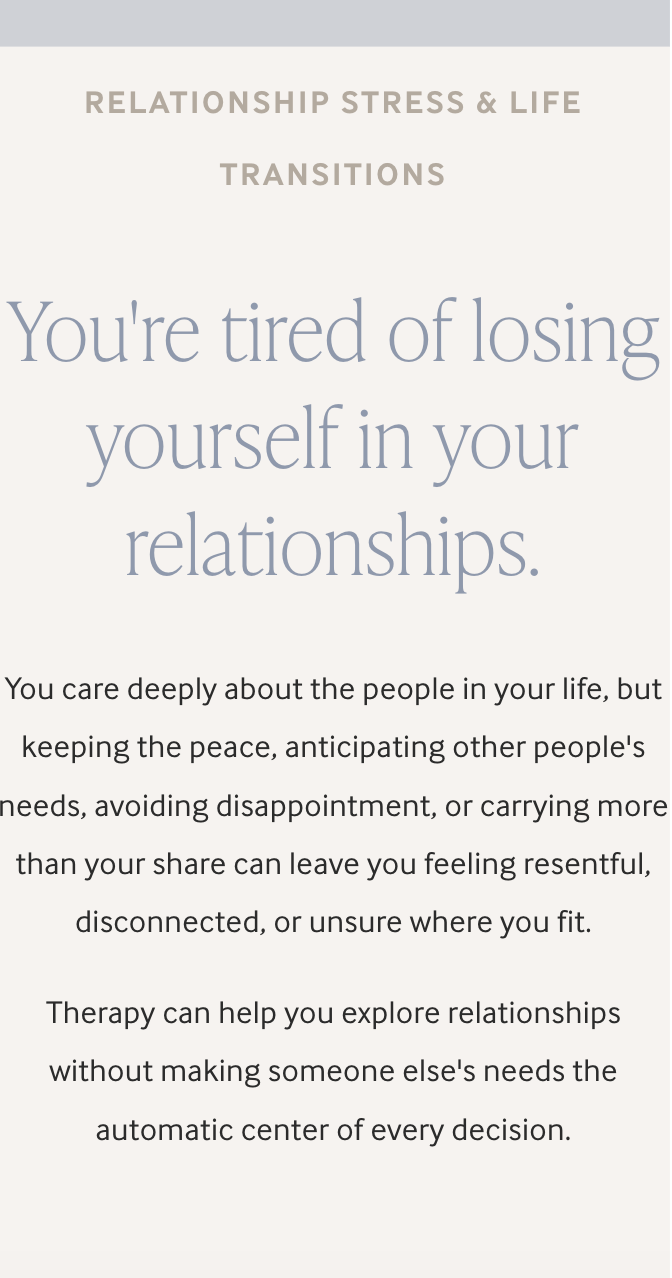
Navigating Relationships When You’re Stretched Too Thin
When life feels overwhelming, your relationships often take the hit. You spend so much time meeting demands, keeping things running, and taking care of everyone else that by the time you get to your personal life, there’s little energy left. Maybe communication with your partner feels strained, parenting feels more frustrating than fulfilling, or you’re pulling away from friends because it’s just too much. Or maybe the stress of daily life follows you home, making small conflicts feel bigger and leaving you feeling isolated, misunderstood, or emotionally drained.
You don’t have to figure this out alone. Together, we’ll create a space where you can untangle stress from your relationships and learn how to show up in a way that feels more balanced. Using strategies from Acceptance and Commitment Therapy (ACT), we’ll work on improving communication, setting boundaries that actually work, and breaking free from the cycle of guilt, resentment, or exhaustion that keeps you stuck.
Your relationships don’t have to suffer under the weight of burnout. You can reconnect with the people who matter most, show up fully in your personal life, and strengthen your relationships without losing yourself in the process.
-
When Your Brain Won’t Slow Down: Navigating Life with ADHD
Your mind is constantly running—jumping from one thought to the next, filled with ideas, reminders, and an endless to-do list. You want to stay organized, follow through on plans, and keep up with the demands of work, relationships, and daily life. But no matter how hard you try, it can feel like you’re always playing catch-up, struggling with focus, time management, or that nagging sense that you’re falling behind.
Maybe you’re overwhelmed by decision fatigue, stuck in cycles of procrastination, or frustrated that simple tasks feel impossible while your brain hyperfocuses on the wrong things. Maybe you’ve spent years being told to “just try harder,” making self-criticism and shame an unwelcome part of the equation. And when exhaustion, self-doubt, and the fear of letting others down take over, it’s easy to feel like you’ll never quite get it together.
But ADHD doesn’t have to define your self-worth. Together, we’ll create a space where you can stop battling your brain and start working with it. Using strategies from Acceptance and Commitment Therapy (ACT), we’ll focus on helping you manage executive function challenges, build sustainable systems that actually fit your life, and break free from the cycle of frustration and shame. You don’t have to fit into someone else’s mold of productivity and success—you can learn how to navigate life in a way that honors how your brain works.
You are not broken. You are not lazy. And with the right tools and support, you can move through life with more clarity, confidence, and self-compassion—without feeling like you have to fix yourself.
-
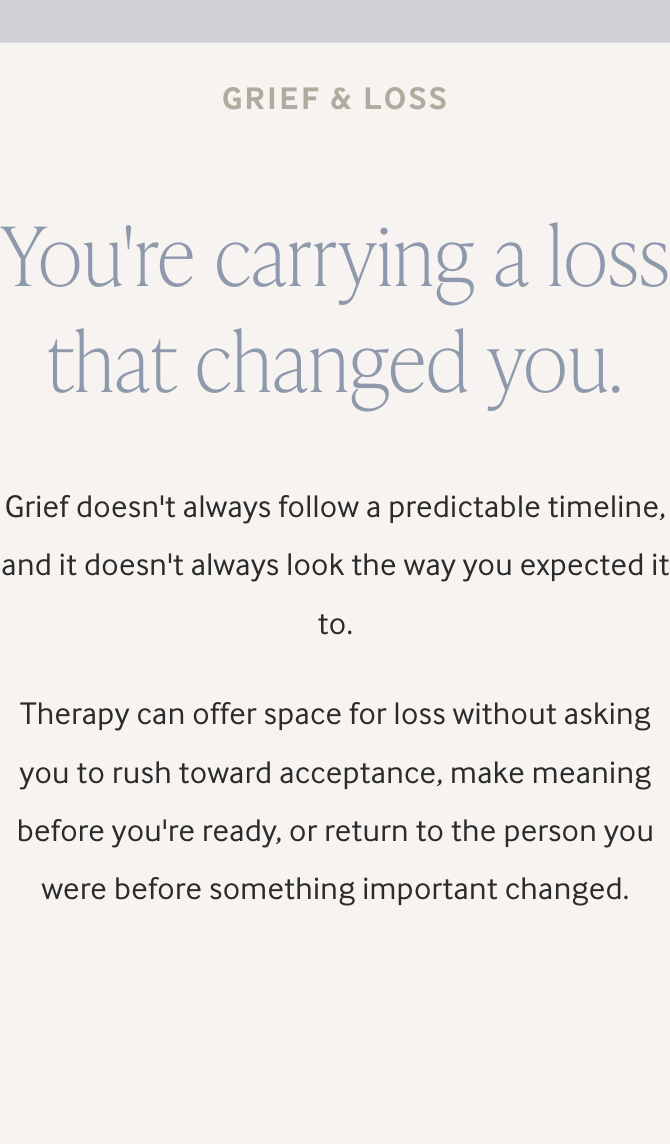
When Grief Feels Too Heavy to Carry Alone
Grief isn’t just sadness—it’s a full-body experience that can leave you feeling untethered, exhausted, or completely overwhelmed. Some days, it may feel like you’re managing, going through the motions, holding it together for others. Other days, it sneaks up on you—hitting like a wave when you least expect it, making even the simplest tasks feel impossible. Whether you’re mourning the loss of a loved one, the end of a relationship, a major life transition, or even the version of life you thought you’d have, grief can make the world feel unfamiliar and unsteady.
You may wonder if you’re “grieving the right way” or feel pressure to move on, but grief doesn’t follow a timeline. It shows up in waves—sometimes as sadness, sometimes as numbness, anger, guilt, or even relief. There’s no right way to grieve, but there are ways to move through it without getting stuck in suffering.
Together, we’ll create a space where you can hold space for your grief without letting it consume you. Using Acceptance and Commitment Therapy (ACT), we’ll focus on making room for all the emotions that come with loss while helping you stay connected to what still matters. You don’t have to force yourself to “move on” or forget—healing is about learning how to carry your loss while still making space for meaning, connection, and hope.
Grief may change you, but it doesn’t have to define you. You can learn how to move forward—not by leaving your loss behind, but by carrying it in a way that honors what you’ve lost while still making room for what’s next.
-
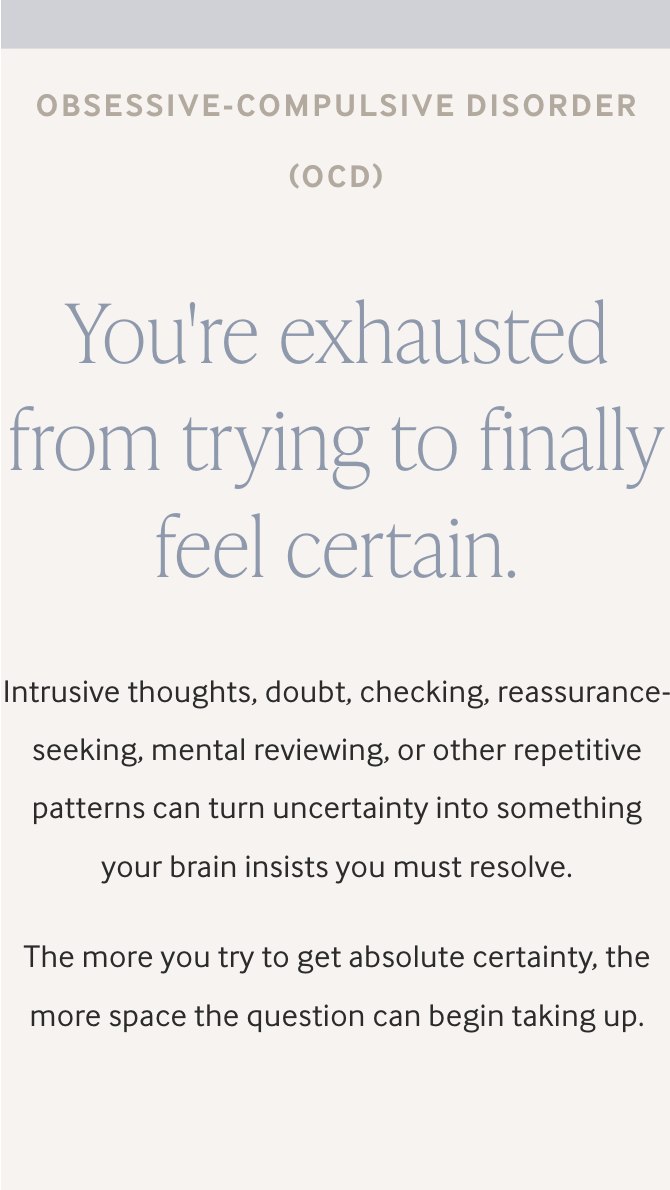
When Your Mind Feels Like It’s Stuck on Repeat
OCD isn’t just about compulsions or intrusive thoughts—it’s an exhausting cycle that can leave you feeling trapped, overwhelmed, and mentally drained. Some days, you might feel like you’re managing, pushing through the thoughts and rituals, holding it together for others. Other days, the anxiety is relentless—doubts spiral, compulsions take over, and even the simplest tasks feel impossible. Whether it’s checking, seeking reassurance, mental reviewing, or avoiding triggers, OCD can make your world feel small and unsteady.
You may wonder if you’re “handling it the right way” or feel pressure to just stop the thoughts, but OCD doesn’t follow logic. It creates loops of fear, doubt, and temporary relief, pulling you deeper into compulsions even when you know they don’t make sense. There’s no way to completely eliminate intrusive thoughts—but there are ways to break free from the cycle and stop them from controlling your life.
Together, we’ll create a space where you can learn to respond differently to OCD without letting it consume you. Using Acceptance and Commitment Therapy (ACT) and evidence-based exposure strategies, we’ll focus on making space for discomfort while helping you stay connected to what truly matters. You don’t have to keep fighting your thoughts or giving in to compulsions—healing is about learning how to unhook from them and move forward with clarity, confidence, and freedom.
OCD may be part of your story, but it doesn’t have to define you. You can learn how to step out of its grip—not by forcing the thoughts away, but by changing the way you respond to them so they no longer run your life.
-
When Work Takes More Than It Gives
You didn’t get into your career expecting it to be easy, but you also didn’t expect it to take this much. The long hours, constant pressure, and unrealistic expectations have left you feeling drained, undervalued, and questioning if this pace is sustainable. Maybe you find yourself bringing work home—physically or mentally—unable to switch off even when you’re supposed to be resting. Maybe the stress of your job is bleeding into your personal life, making you irritable, disconnected, or too exhausted to enjoy the things that once made you feel like you.
Workplace stress doesn’t just disappear when you clock out, and burnout doesn’t mean you’re weak—it means you’ve been running on empty for too long. Together, we’ll create a space where you can unhook from workplace stress without losing your ambition or sense of purpose. Using Acceptance and Commitment Therapy (ACT), we’ll focus on helping you set boundaries, manage workplace anxiety, and navigate challenges with resilience—so your job doesn’t define your entire life.
You can be successful without sacrificing your well-being. You can care deeply about your work and care for yourself. Let’s find a way forward that allows you to thrive—not just in your career, but in your whole life.
-

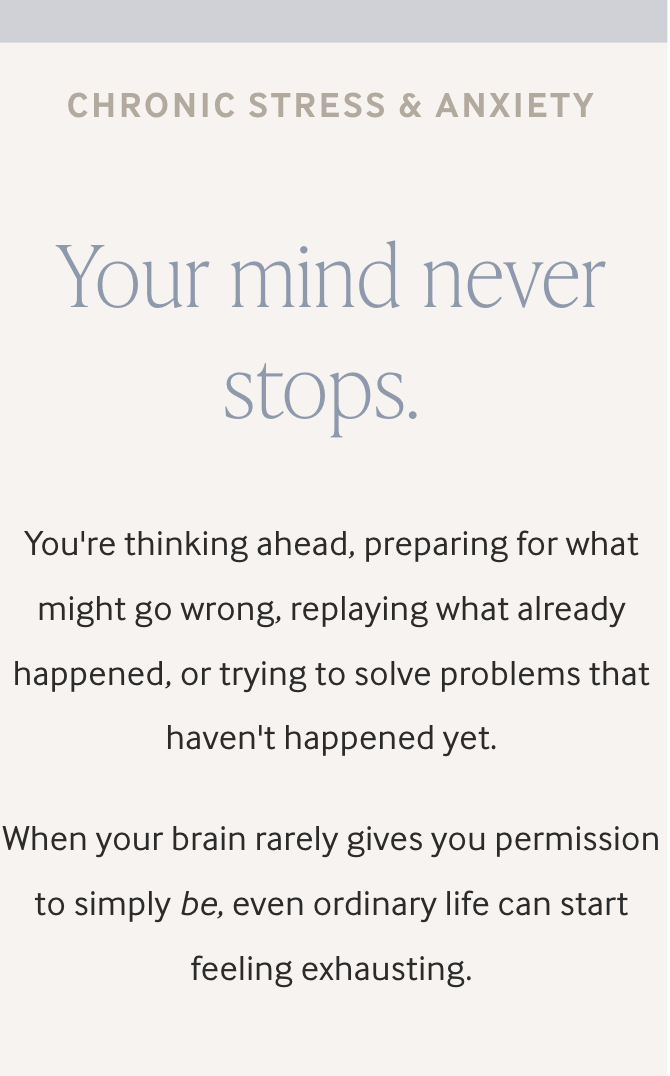
Your mind never stops
When you're overthinking, worrying, replaying conversations, and feeling like you can never fully relax.
-

You're constantly taking care of everyone else.
When you're running on empty, everything feels overwhelming, and rest never seems to be enough.
-

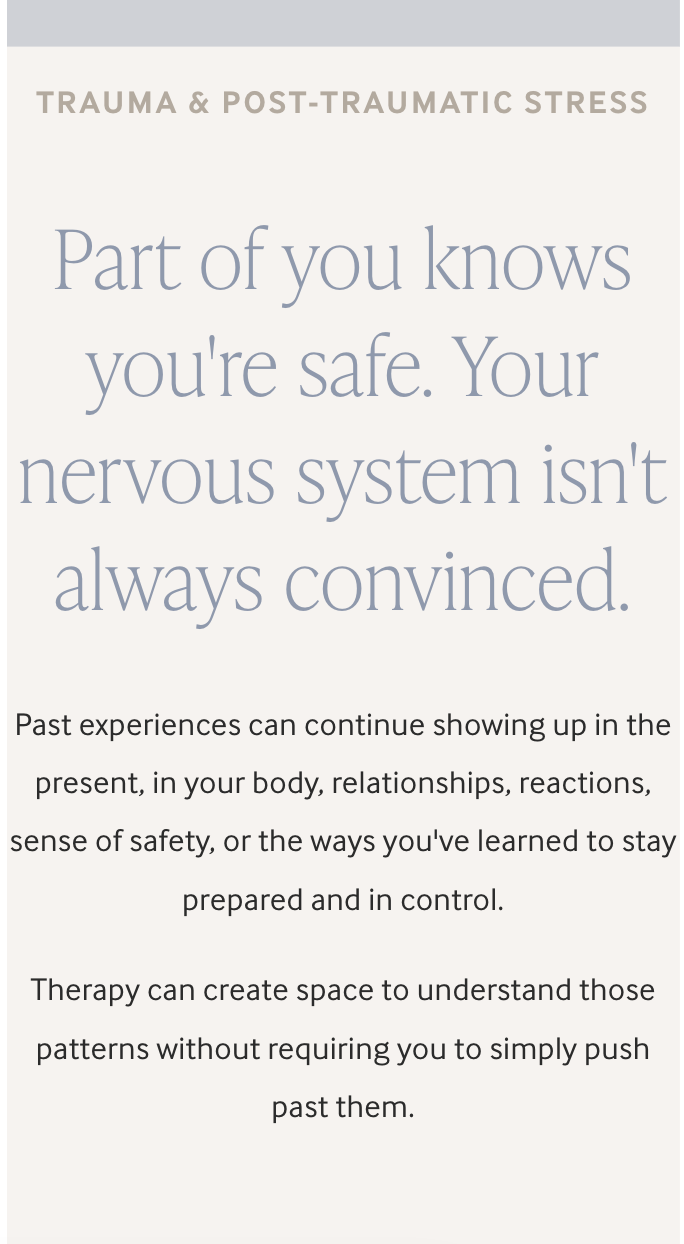
You're doing your best to move forward but it's absolutely exhausting and comes with a huge cost..
When painful experiences continue to shape your relationships, reactions, and sense of safety.
-

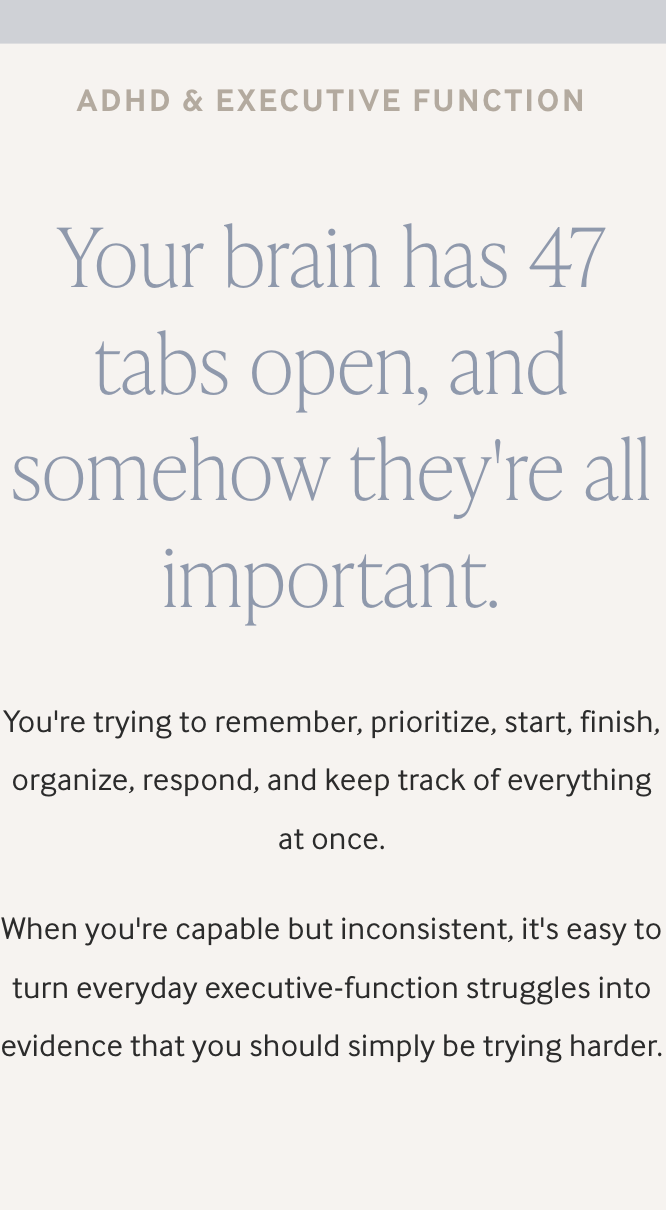
You're juggling a hundred thoughts at once and trying chase them all.
When you're struggling to focus, finish tasks, stay organized, or keep up with all the moving pieces in your life.
-

You're tired of feeling disconnected.
When conflict, communication challenges, or relationship patterns leave you feeling lonely, misunderstood, or emotionally exhausted.
-

You're exhausted from fighting with your own mind.
When intrusive thoughts, uncertainty, or repetitive behaviors begin taking up more and more space in your life.
-

You're carrying a loss that changed you.
When you're trying to navigate life after losing someone, something, or a version of yourself.
Ready to take the next step with your mental health?
I’d love to support you. Use the buttons below to learn more about me and get in touch for a free, confidential consultation to chat about which of the many offerings at The Red Door would be right for you.